MekkekattuShri Nandikeshwara Temple

Temple

The Temple

Mekkekattu Shri Nandikeshwara Temple in Shiriyara: its worship, its history, its sacred wooden figures and the traditions the community carries forward.

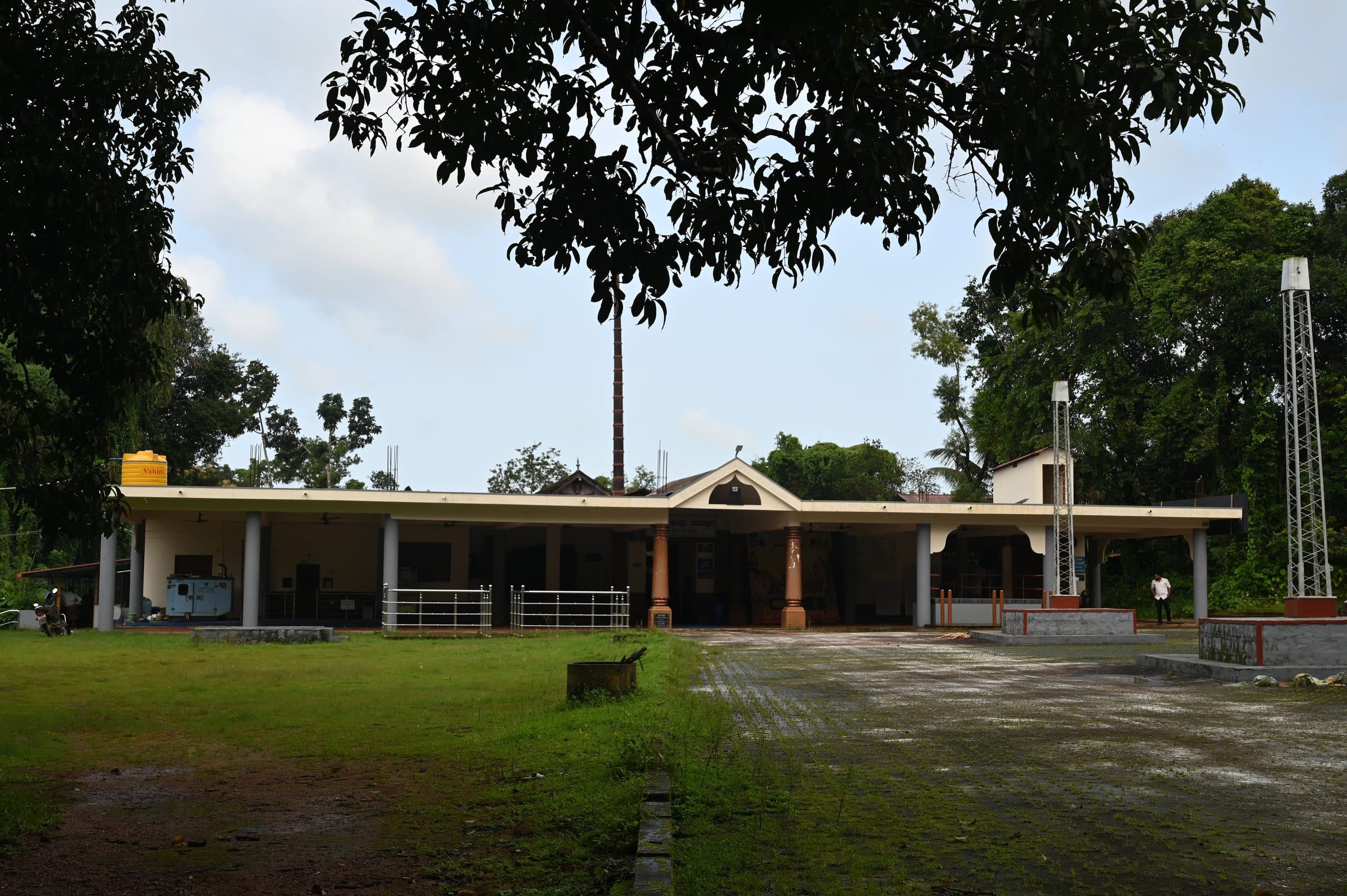
The temple seen across its open forecourt: a long tiled hall with a pillared verandah, a gabled porch at the centre and a tall metal flagstaff behind it, framed by trees.

Temple introduction

Mekkekattu Shri Nandikeshwara Temple stands in Shiriyara village, in Brahmavara Taluk of Udupi District, Karnataka. It is a place of daily worship as well as a centre of the cultural life of the surrounding villages.

The temple is open to devotees each morning and evening. Alongside its daily worship it is known for its sacred wooden figures, its ritual traditions and its association with Yakshagana.
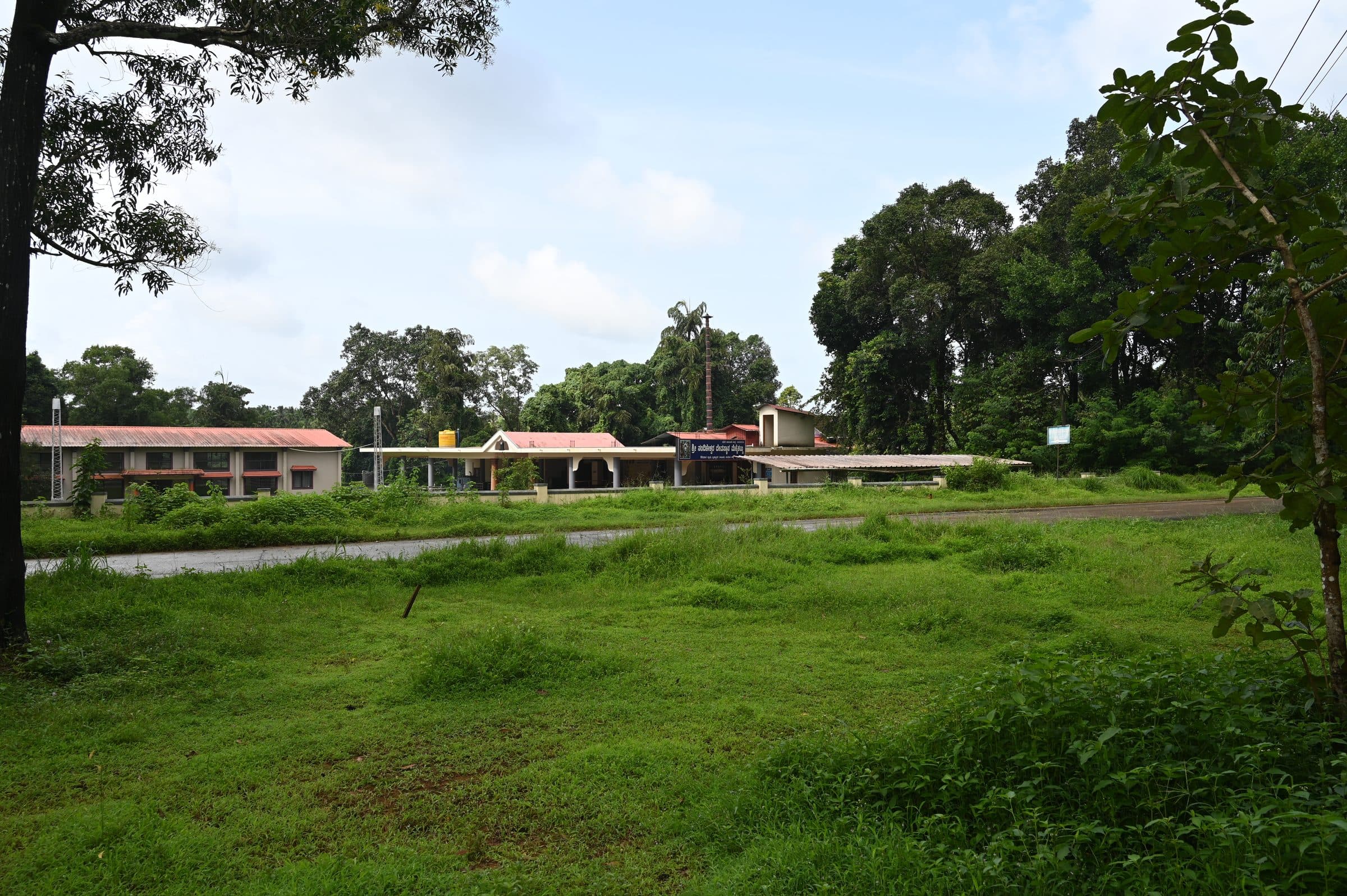
Open green ground in front of the temple: grass and low bushes in the foreground, and the long tiled buildings standing among trees along the far edge under a clouded sky.

Location and community

The temple lies inland from the coast, among the fields and areca gardens of Brahmavara Taluk, and is reached from the villages around Shiriyara. Udupi is the nearest town of any size.

It is looked after by the temple committee together with the devotee community of the surrounding villages, whose households have kept its worship and its annual observances going.

Devotees are welcome during darshana hours. Visitors are asked to observe the customs of the temple, and to seek permission before photographing within the premises.

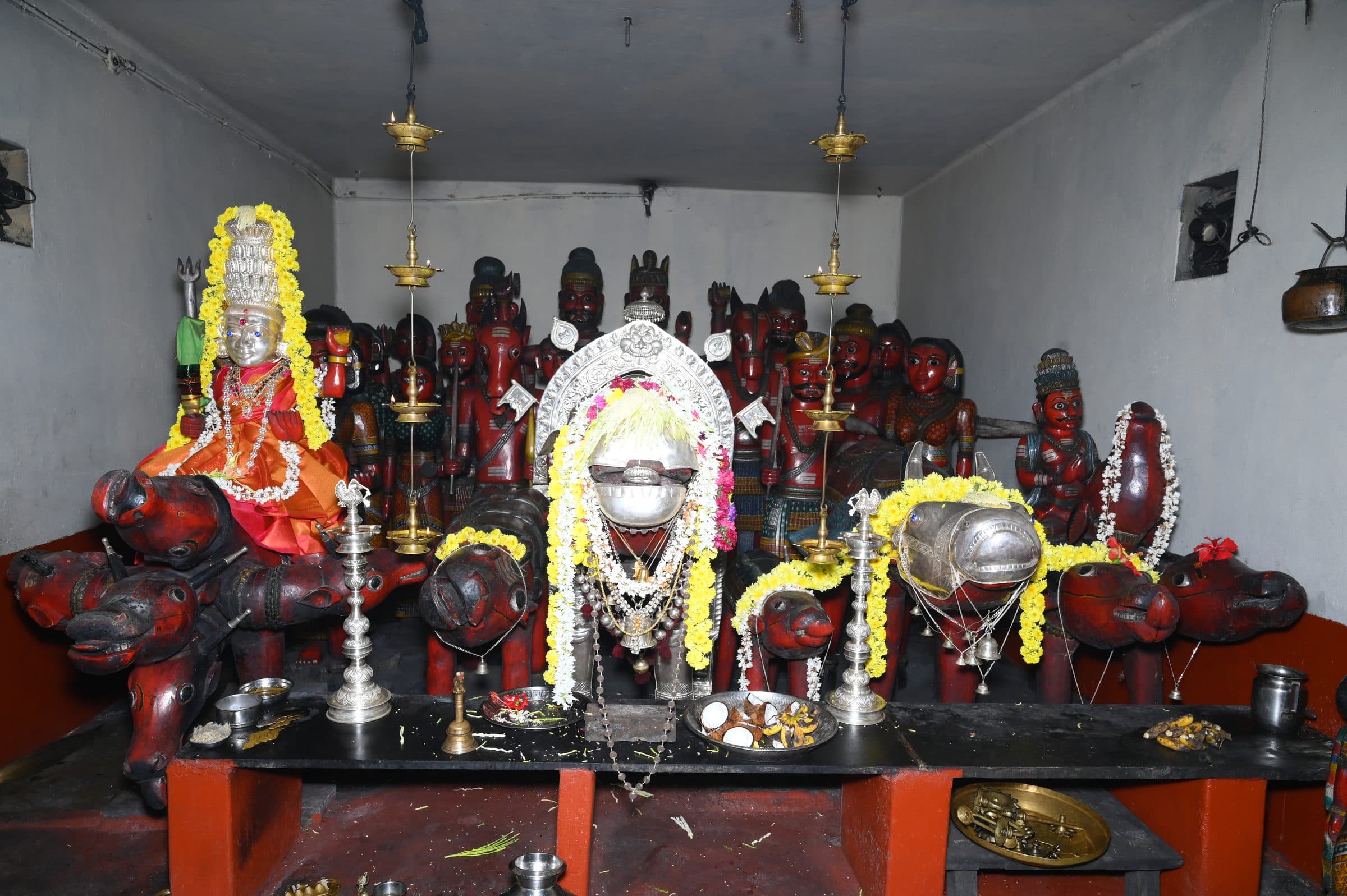
The shrine chamber seen from the front: garlanded silver-covered figures at the centre, rows of red painted wooden figures behind, carved animal mounts along the platform, hanging brass oil lamps and offering vessels in front.

Shri Nandikeshwara and worship traditions

This section describes living tradition and local narrative. It is not presented as independently verified history.

According to temple tradition the presiding deity is Nandikeshwara, worshipped here in the form known locally as Akasha Nandi. Durga, addressed locally as Ammanavaru, is also worshipped at the temple.

Worship is offered morning and evening through the year. According to temple tradition the observances associated with this kshetra include Dhakke Bali, Genda Seve, Totla Sedi and Tulabhara, each with its own occasion in the ritual year.

How each observance is performed, and how devotees may take part, is arranged with the temple. The Poojas & Sevas page lists what may be booked.

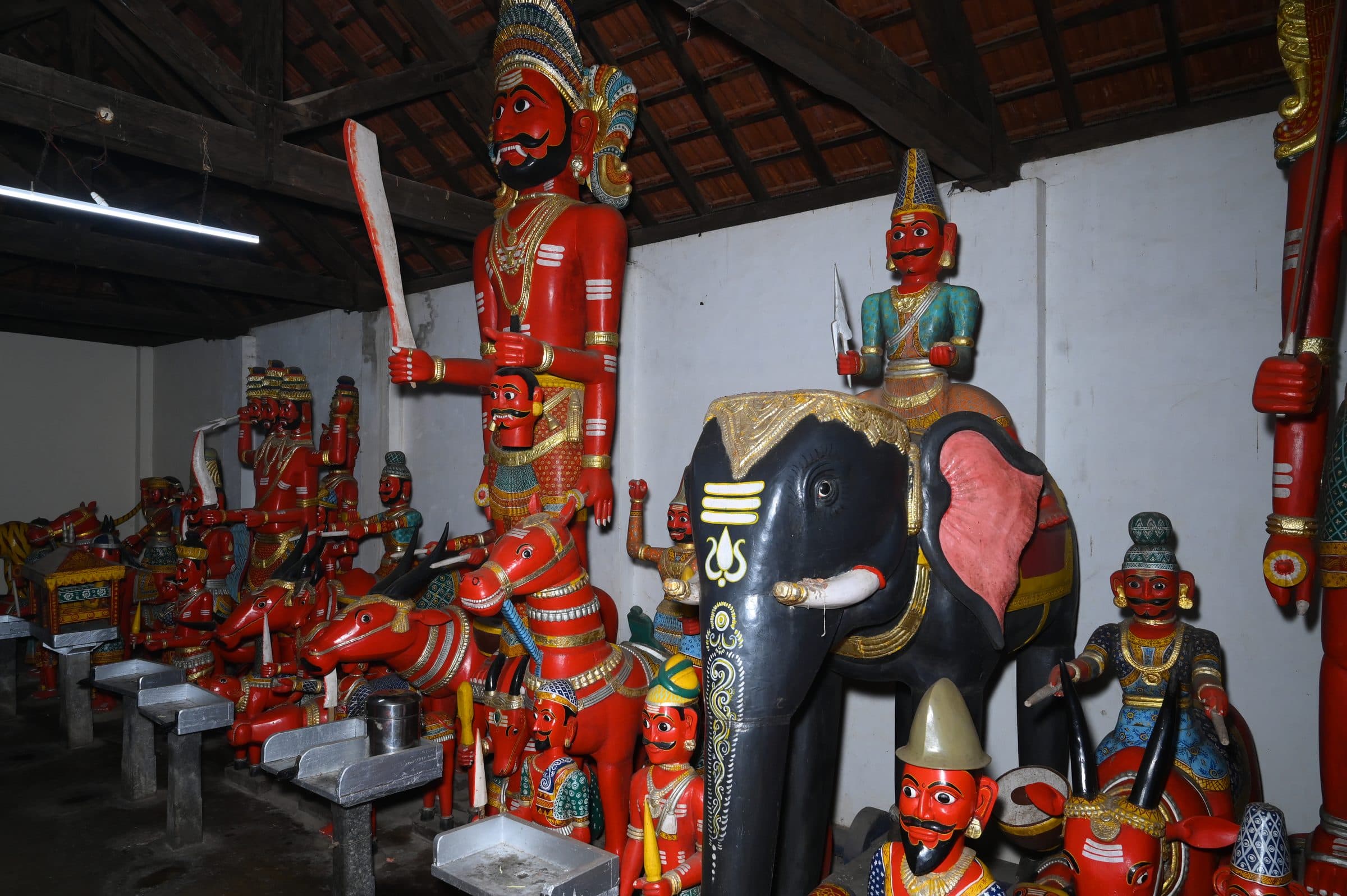
Inside the hall where the wooden figures stand: a tall red figure holding a sword beside a large black elephant mount, further painted figures ranged in rows behind them on low platforms, under a tiled roof carried on timber beams.

Temple history

This section describes living tradition and local narrative. It is not presented as independently verified history.

The accounts below are drawn from living tradition and from local narrative, together with the history publication supplied by the temple. They are presented as tradition and as a cited source, not as independently verified history.

Local tradition records more than one explanation for the name Mekkekattu. These explanations circulate side by side in the surrounding villages and no single one is treated here as settled.

The temple and its heritage structures are maintained today through the efforts of the temple committee and the devotee community.

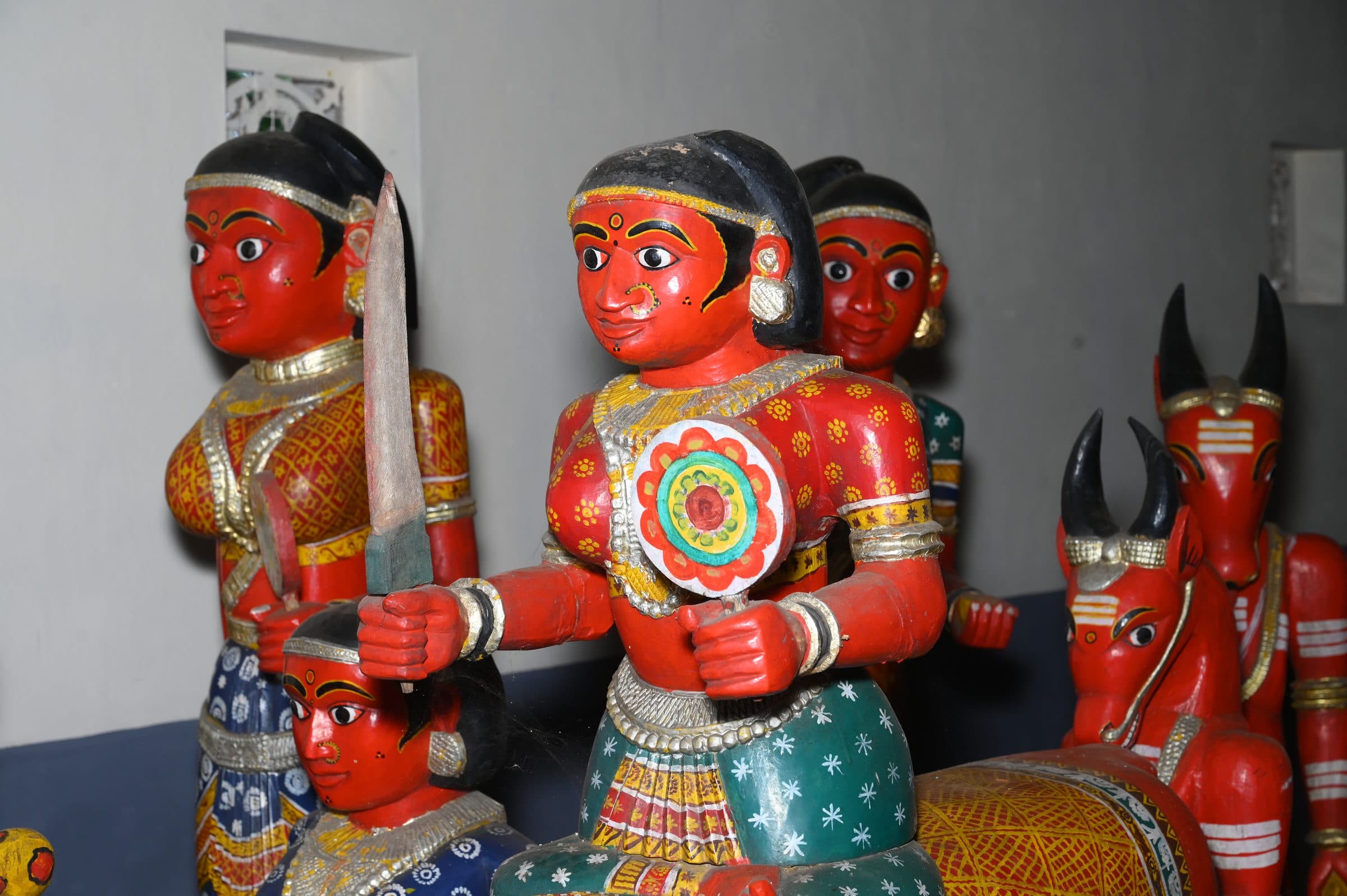
Close view of carved wooden figures painted red, with black hair, patterned garments and silver ornaments — one holding a sword, another a decorated disc — with a red wooden bull beside them.

Urusale and sacred wooden figures

This section describes living tradition and local narrative. It is not presented as independently verified history.

The temple is known for its remarkable collection of sacred wooden figures, kept in the structure known as the Urusale. Alongside them stand ritual traditions carried forward by the community over generations.

The collection is one of the reasons the temple is regarded as significant to the cultural heritage of coastal Karnataka.

The history publication supplied by the temple records an inventory of 174 figures. That is what the publication records; it is not a currently verified count, and differing counts circulate elsewhere.

The figures are carved and painted, and stand together in rows with their animal mounts. The carving of such figures in this region is associated with the Gudigara community of craftsmen, whose woodwork is part of the wider artistic tradition of coastal Karnataka.

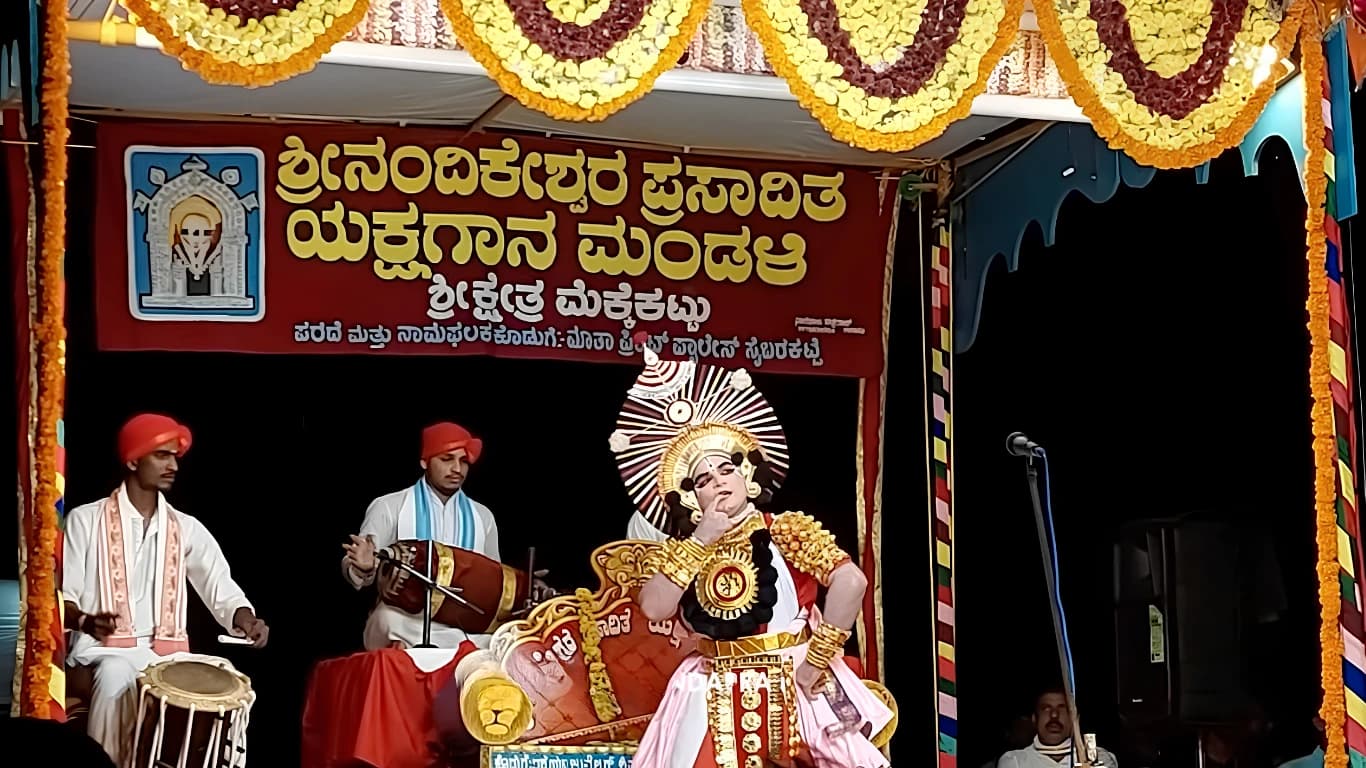
A Yakshagana performance on a stage hung with marigold garlands: a costumed performer in painted make-up, gold ornaments and a tall ornate headdress seated at the centre, with two accompanists in white dress and red headcloths playing drums to one side.

Cultural heritage and living traditions

The temple's own Yakshagana Mandali carries forward the region's celebrated tradition of music, dance, costume and storytelling. Programmes are arranged by enquiry, with dates and arrangements confirmed directly with the Mandali.

Annual functions and confirmed programmes are published on the Events page as the temple confirms them.

Continue

See the temple, or get in touch

See the temple

Photographs of the shrine, the exterior and the observances that shape the temple's year.

Get in touch

Ask about a visit, an enquiry or a query. The temple office will write back.